
Bond Market Stress: The Transmission to Cyclical Stocks
Where we stand today. You can follow the evolution of our analysis and conclusions from previous reports here.
- The need to hedge major equity indexes is becoming more pronounced and urgent.
- Homebuilders enter our radar as another vehicle for expressing the bearish view.
- The intermarket sequence is clear and advancing.
- First Link: Bonds → High Yield Credit → Utilities → Homebuilders.
- Next in line should be, small cap cyclicals credit exposed.
Risk Propensity Momentum
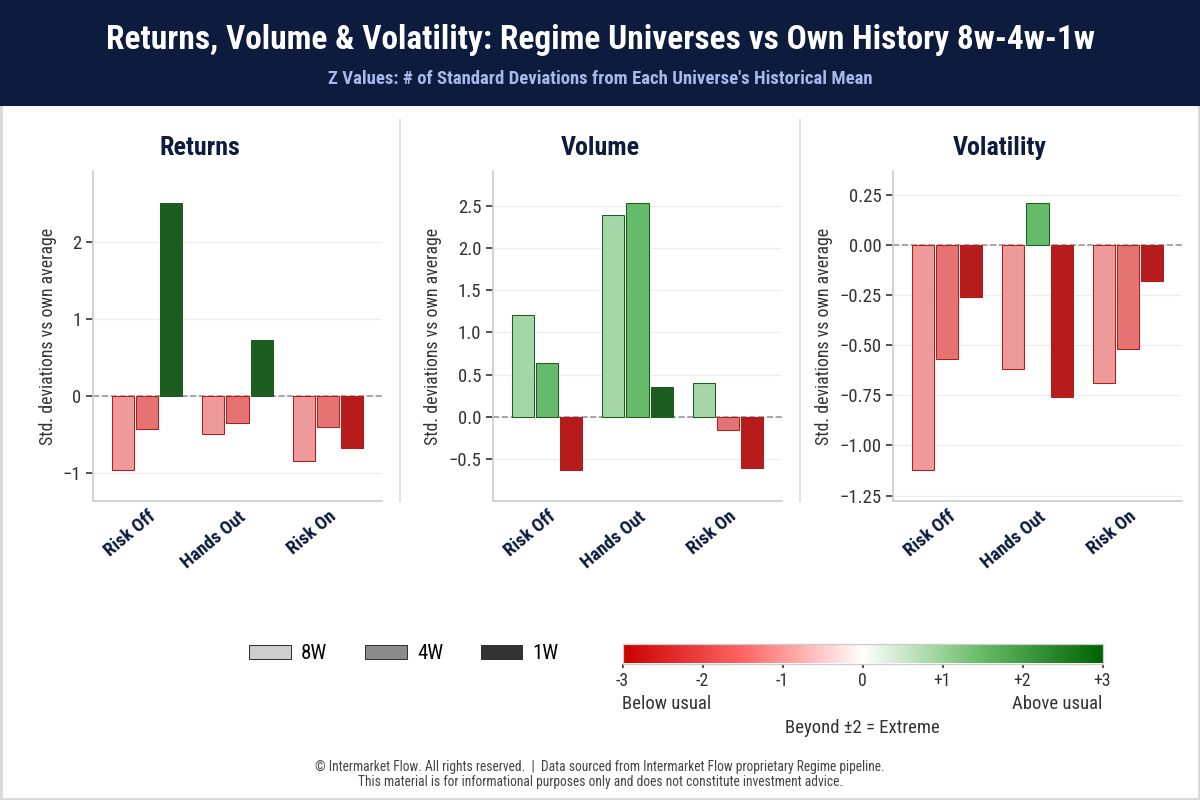
- Volume—and especially the evolution of capital flows across 8W → 4W → 1W—shows massive activity over the 8W and 4W windows, with unusually large flows exceeding +2σ into the hands out regime. (Middle Chart)
- Over the past week, all three regimes saw little activity, suggesting a balance had been reached or a pause started on the weekly timeframe.
Bond Market Stress: How Credit Transmits Pressure to Equities
Two points illustrate the severity of the situation
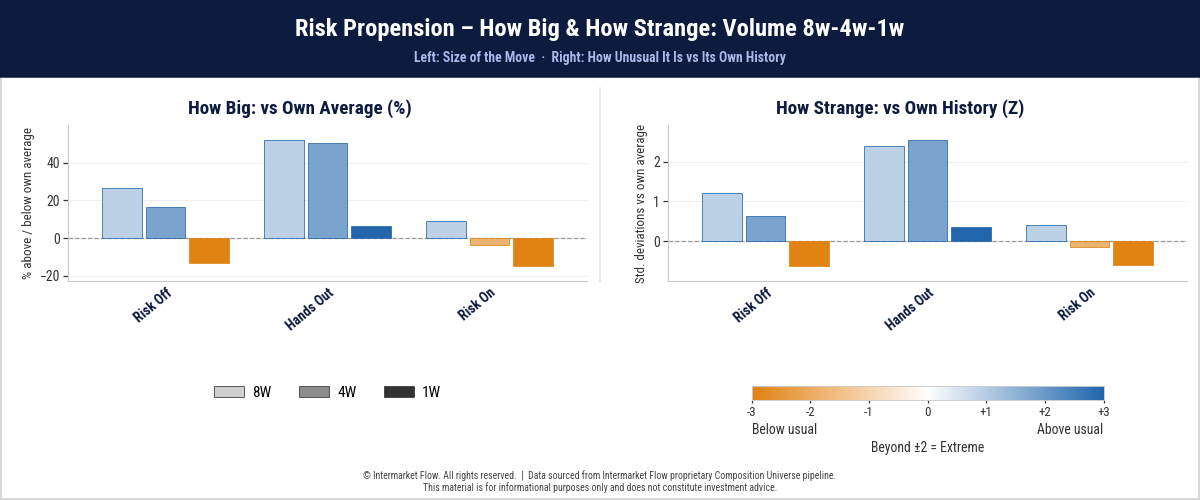
Volume Size & Unusualness
- The chart on the left shows the percentage moves in terms of volume.
- On the right, those moves are compared and normalized for comparison, with their historical behavior—in other words, how unusual they are, in terms of volume. Not a return, Volatility, D.V or even volume.
The 8-week and 4-week readings exceed 2σ: statistically extreme. This has been a sustained run for the exits that began two months ago.
Market Regime and the State of Transition
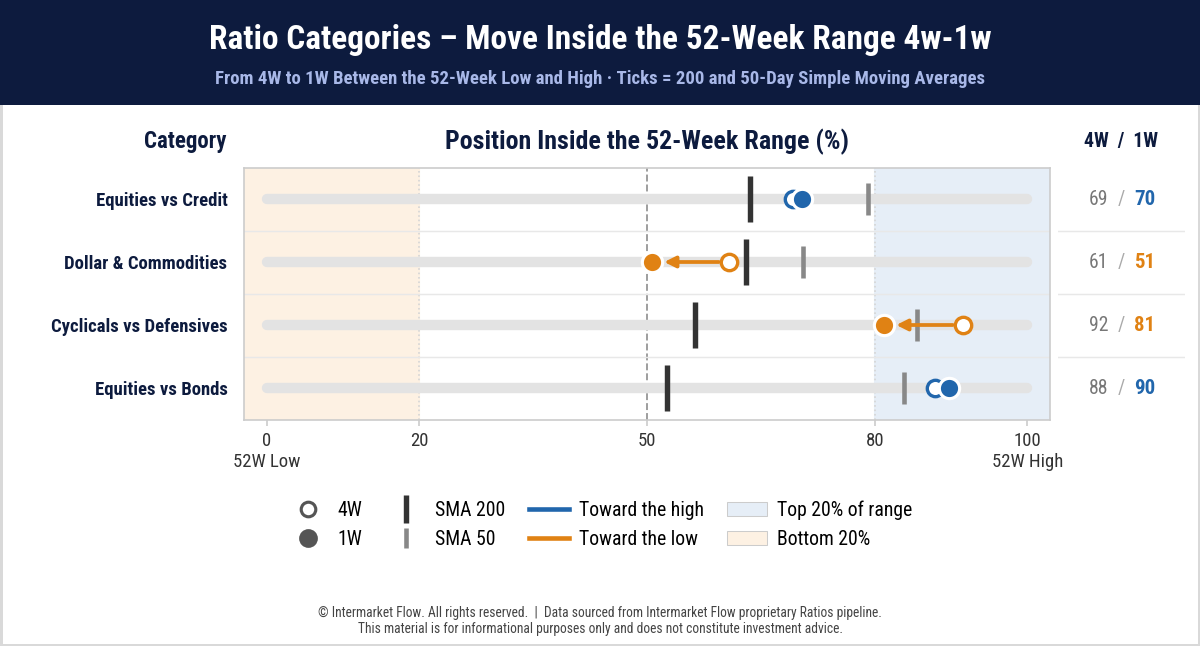
- The equities-to-bonds ratio remains above its 50-day moving average, showing where the transmission process stands and how much further it still has to go. (Last ratio).
- Against credit, transmission is more advanced, with the ratio reaching its 200-day moving average.
- Meanwhile, the cyclicals-to-defensives ratio has just broken below its 50-day moving average, leaving room for further downside and potential targets to pursue.
The focus can be narrowed to credit-dependent cyclicals, particularly smaller companies within those sectors. This focus was reached in previous reports that showed flows were primarily moving towards real economic contraction and or recession assets and categories.
Credit-Dependent Cyclicals: Where Bearish Setups Are Emerging
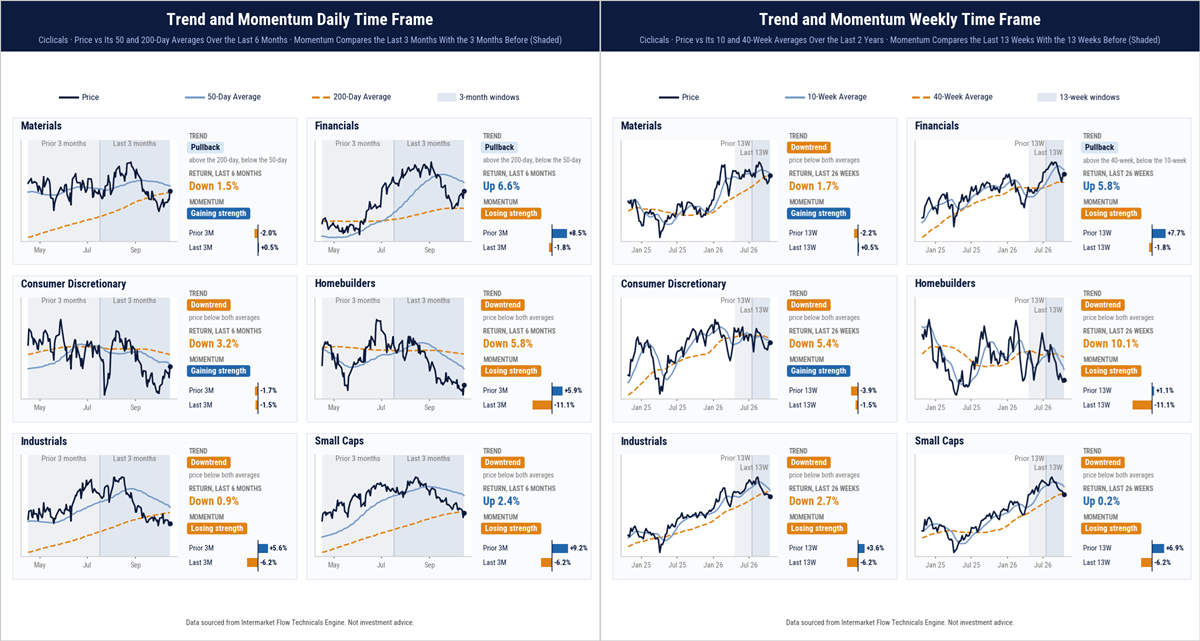
Price Trend and present position
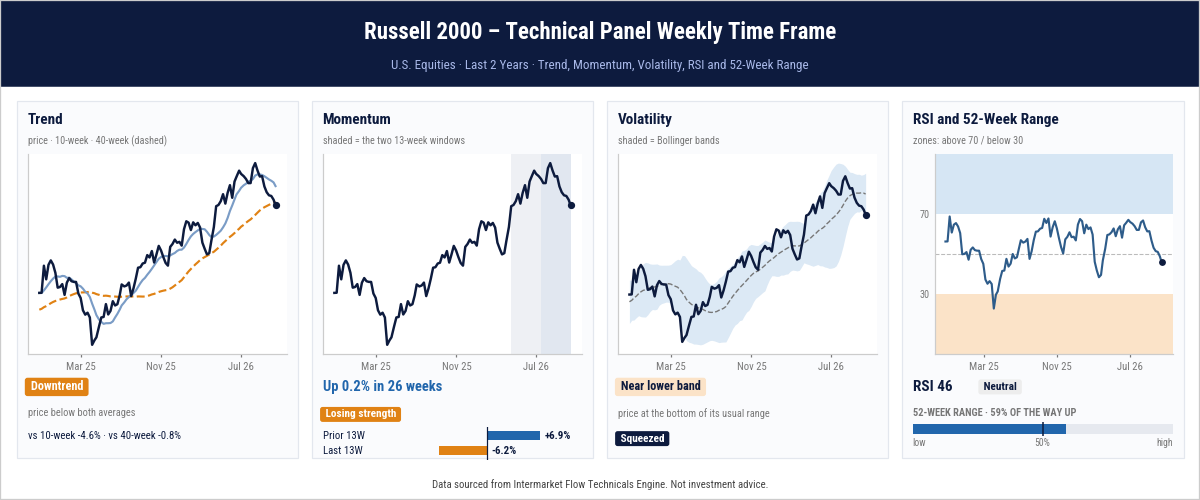
- Across both the daily and weekly time frames, all five sectors and small caps are below the 200-period moving average.
- Homebuilders, which we identified as the weakest sector in the previous report, have already begun correcting in both time frames. See the second chart in the second row for each time frame.
- Materials, Industrials, and Consumer Discretionary are technically aligned across both time frames.
- Materials and Industrials are in a more attractive technical position.
- They broke below the 200-period moving average, retested it, and now offer an excellent risk/reward setup for short positions.
- The cyclicals-to-defensives ratio shown above suggests these moves still have room to run.
- Small caps are one step behind in the transmission chain, only now reaching the 200-period moving average.
Our risk thermometer from a technical perspective across two time frames. A different presentation of a chart we’ve been sending for quite some time now.
Daily Time Frame
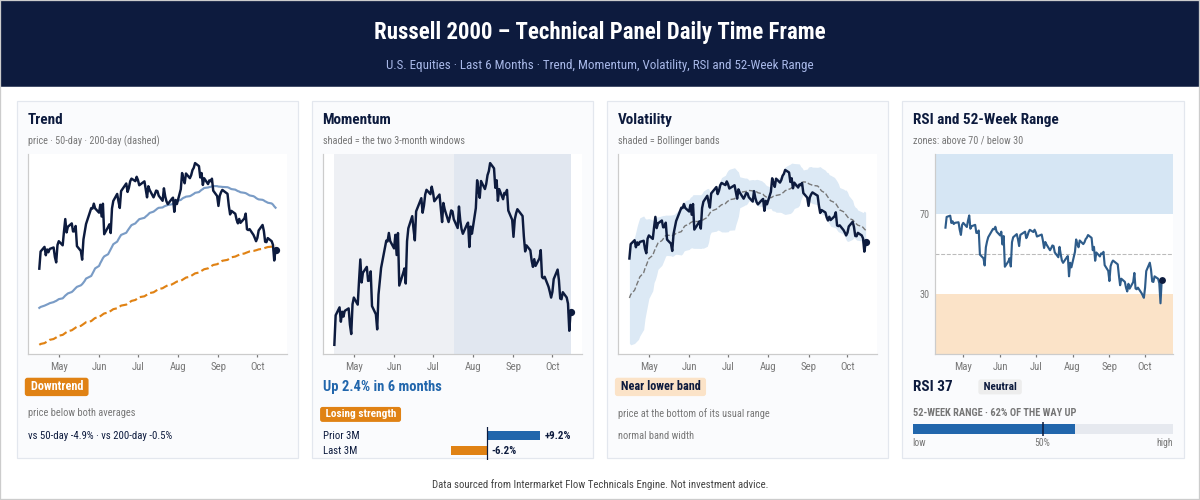
- Daily time frame: a strong, clear directional move, but overextended.
- Mean reversion and oversold conditions point to a pause before continuation.
Weekly Time Frame
Similar technical perspective.
Timing
- Keep in mind that analysis on the daily time frame works within a roughly 20-day horizon; the weekly time frame follows the same logic in weeks.
- The move may occur on day 1 or day 23.
- As time passes, the signal weakens; beyond 25 periods, it expires.
- It is also invalidated if price reaches the invalidation zones along the way.
Main conclusions
- With each report, more links between the bond market and equities have emerged.
- First, within the broader bond-market selloff, a credit crisis took shape.
- High yield came under pressure and remains under pressure.
- The link to Utilities then emerged.
- The most rate-sensitive sector, Home Builders, has already begun its move.
Next in line
- Cyclicals, sectors exposed to highly discretionary spending, and credit-dependent small companies now offer another opportunity—and another visible stage of transmission.Its earnings are affected on both the supply and demand sides. Its margins compress, reducing its future valuations.
- This is not a buying opportunity.
- It is an opportunity to take short positions for investors with the appropriate risk profile.
At the portfolio level
- Yields in the intermediate and long end of the curve are beginning to look compelling. Time to keep them on the radar.
- The currency denomination of these long-end bonds also matters if diversification and risk management are the primary objectives—as they should be under current conditions.
- The turbulence is still unfolding, but these yields could offer a way to lock in future income. High Grade type of debt!
- As we have emphasized in previous reports, cash serves both defensive and offensive roles. What began as a defensive allocation now provides the flexibility to seize emerging opportunities. Once again, a measure taken to protect the portfolio also creates the capacity to act.
- This is the essence of portfolio management.
For those of us fortunate enough to have worked and traded at major banks and trading desks or have simply worked in the markets for an extended period of time, Friday-afternoon, late American session moves bring back memories. These are not retail hours. It is when the big players take positions or hedge risk.
- The transmission is unfolding. The opportunities are taking shape.
Subscribe to IntermarketFlow for two reports a week—connecting market regimes, portfolio risks, and actionable setups.
$65/month. Cancel anytime.
Intermarket Flows
If you believe this is an error, please contact the administrator.