How Fed liquidity is masking cyclical decay while smart money repositions in Korea and Brazil
Intermarket signals are becoming increasingly clear and decisive. Activity continued to decline this week across all major asset classes. Compared to last week, only commodities showed a modest pickup in movement.
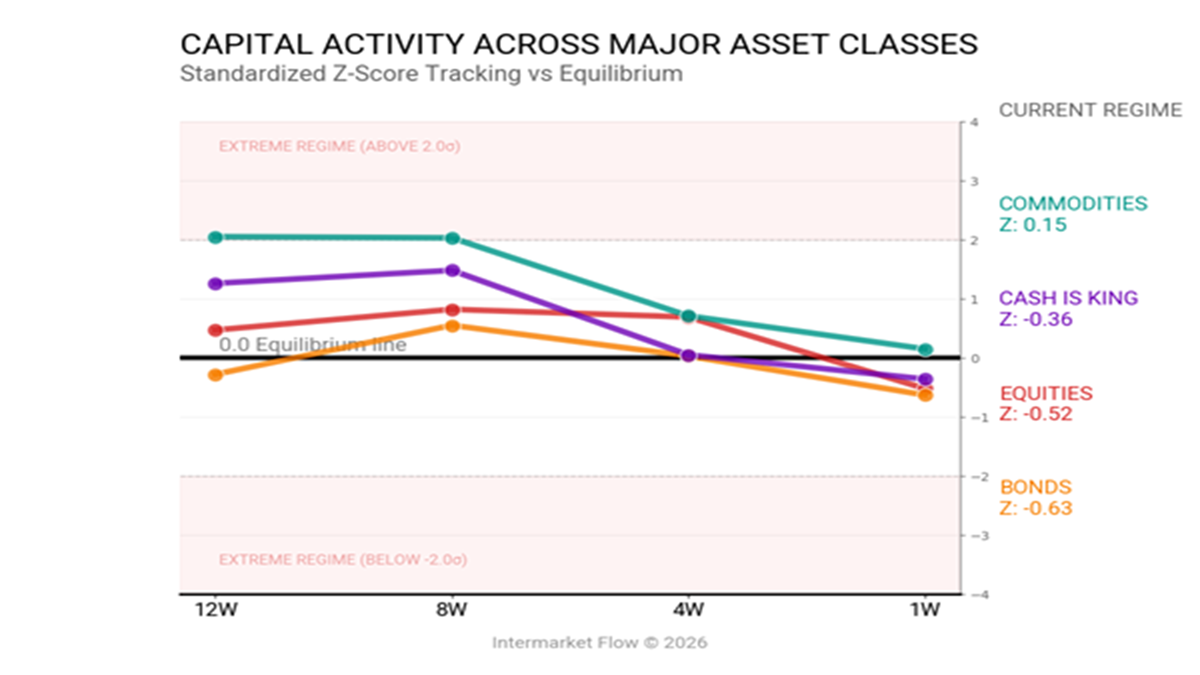
Intermarket signals coming from the FX markets
The following analysis must be conducted within the context described by this chart. Bonds markets are sending a clear message.
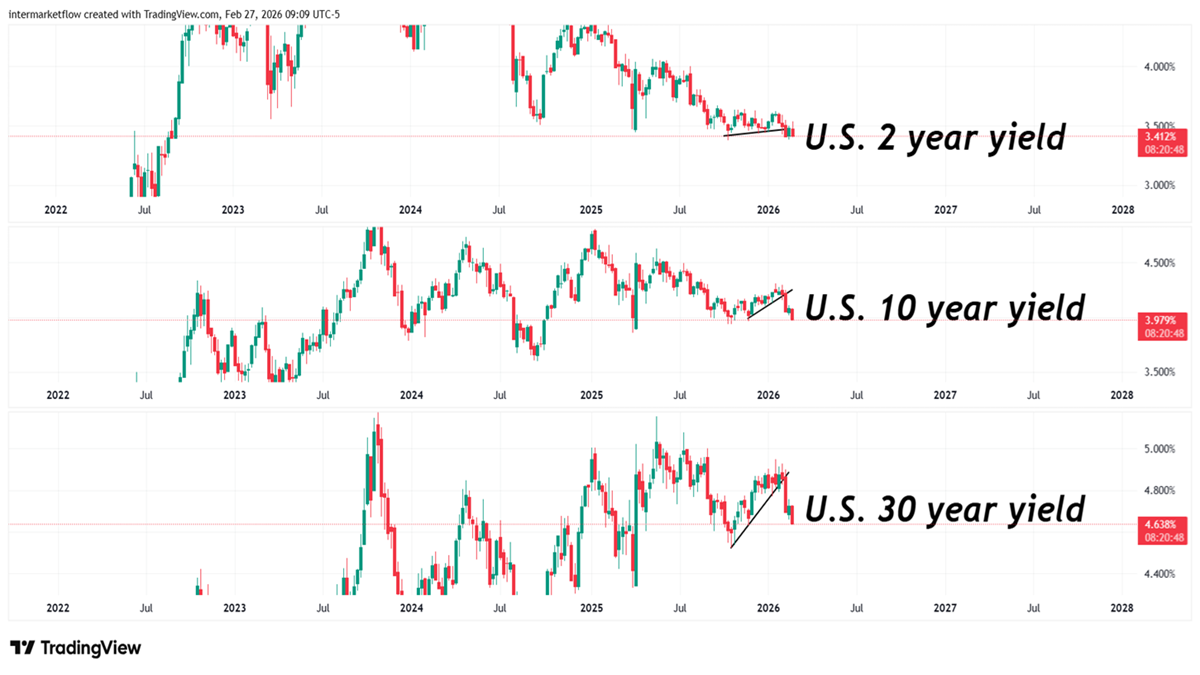
Slower growth and disinflation ahead. The message is clear and loud.
Swiss Franc still a safe haven
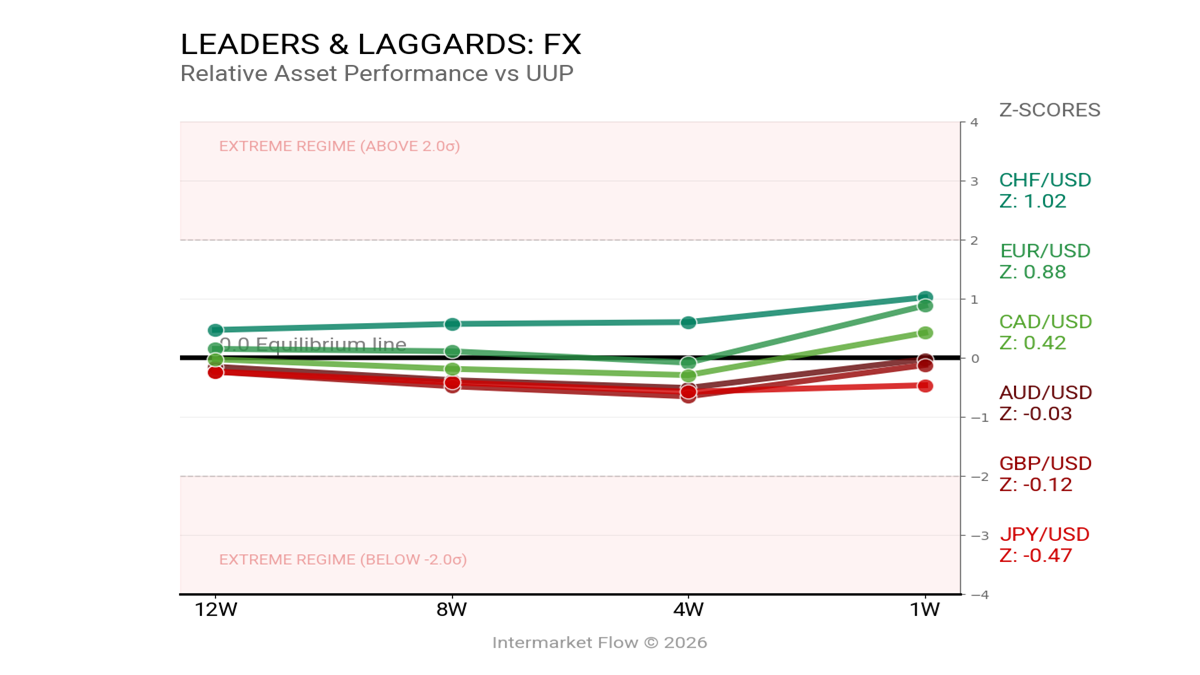
The Swiss Franc — a historical safe haven in periods of stress — is the fiat currency showing the strongest relative activity versus the Dollar, for the last 3 months and probably, more than that.
Considering it is a currency with limited real economic scale behind it and minimal use in global trade flows, this surge in activity reflects a clear state of market sentiment.
Given that the spot rate in Switzerland is 0%, we can quantify fear.
Intermarket Signals and Gold
Investors use gold as the reference parameter, but when confirmed by the Swiss Franc we can identify different layers of risk, each requiring distinct actions to manage and trade them effectively even though they yield exactly the same: 0%.
There are rate risks, currency valuation risks and there is confidence in fiat currency risk. They may look like similar risks, but each one is driven by different underlying factors.
The Swiss franc reflects two of these risks, while gold aggregates them all.
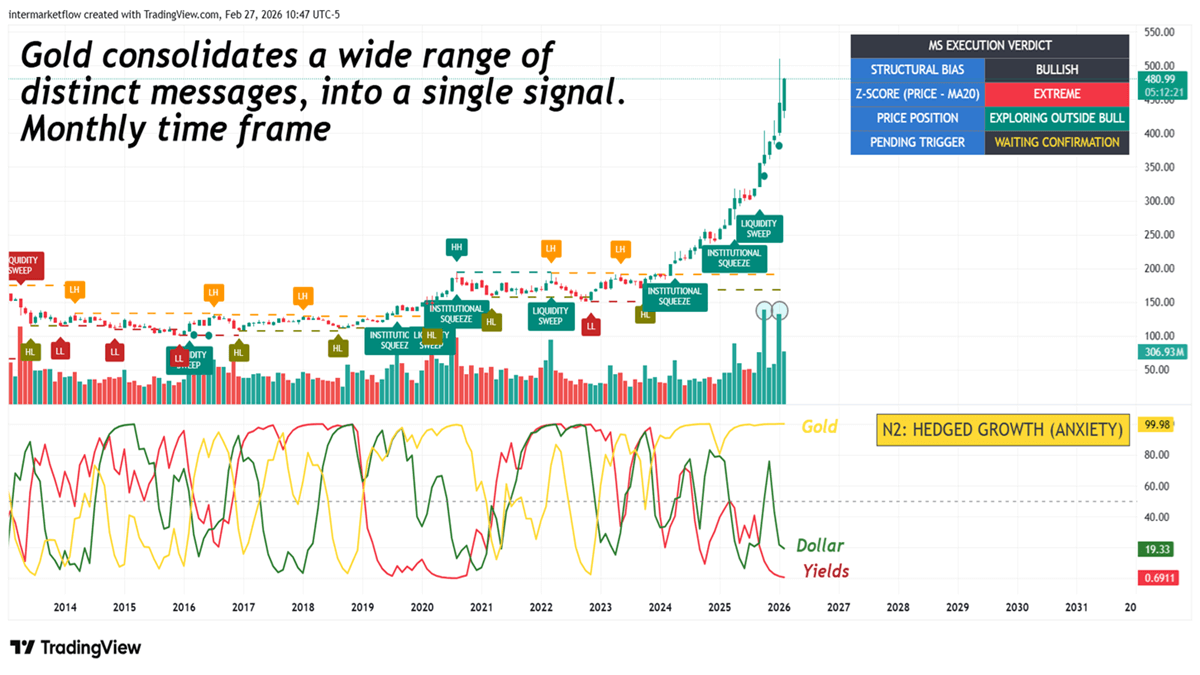
Below, we observe the behavior of Gold, the Dollar, and interest rates overlaid. A context where rates and the dollar are falling while gold is at all-time highs describes a strong stress scenario.
The liquidity bull trap
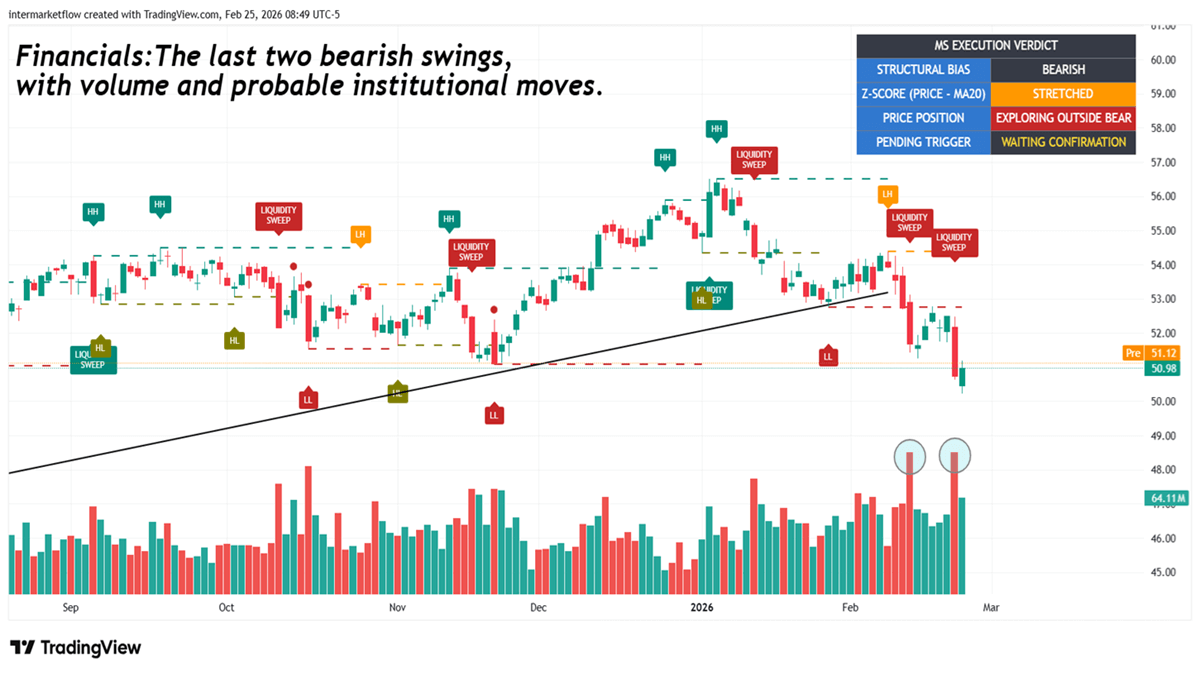
We've been talking about the financials for quite a while now. A chart from last mid week report:
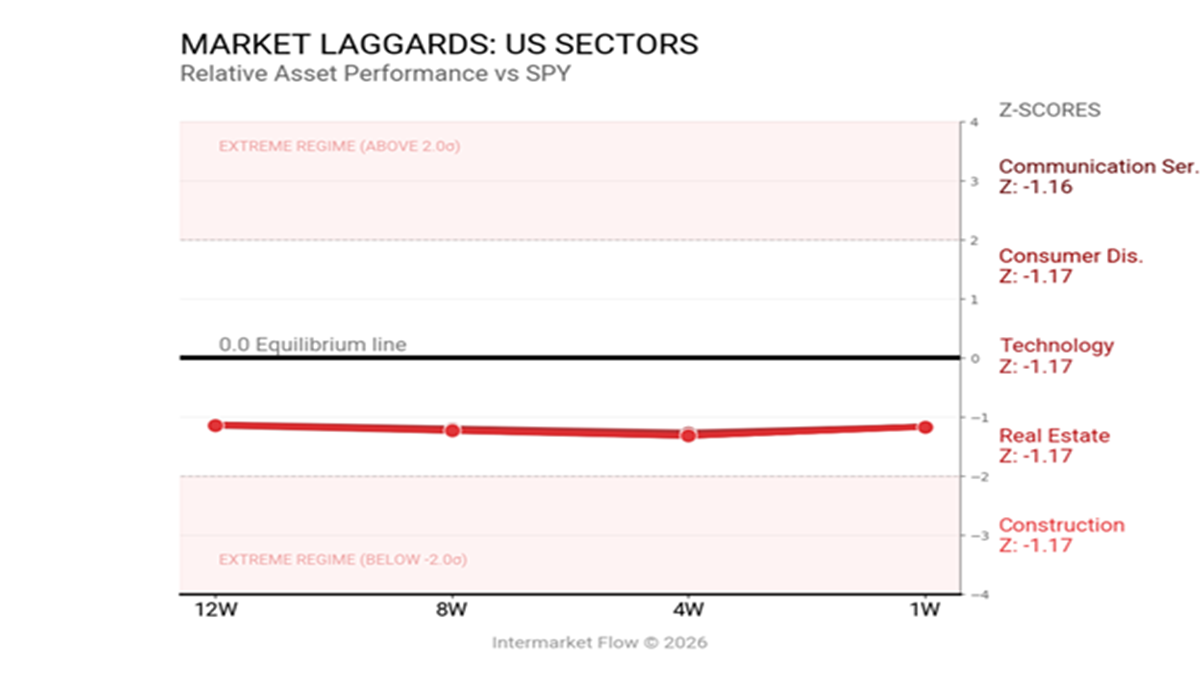
To further describe today’s market ecosystem, we look at sector-level activity across the US economy.
The three sectors with the weakest relative activity versus the S&P 500 average are cyclical — including those that typically lead the macro cycle.
Construction, by definition, is the sector that leads inflection points in the macro cycle.
This decline in equity sector activity is unfolding while the Fed is absorbing Mortgage-Backed Securities at par, guaranteeing demand. Yet even with that parachute in place, the market remains lifeless.
A partial recap
- A liquidity bull trap is unfolding in the SPY.
- The situation in the US economy is clear and yet SPY is trading just 1% from its all time highs.
- These valuations create wider operating margins simply because they are percentages of those underlying levels. Of course, this also breeds structural fragility.
- Margin debt levels are at absolute historical highs as a consequence of these valuations.
Translate into market levels
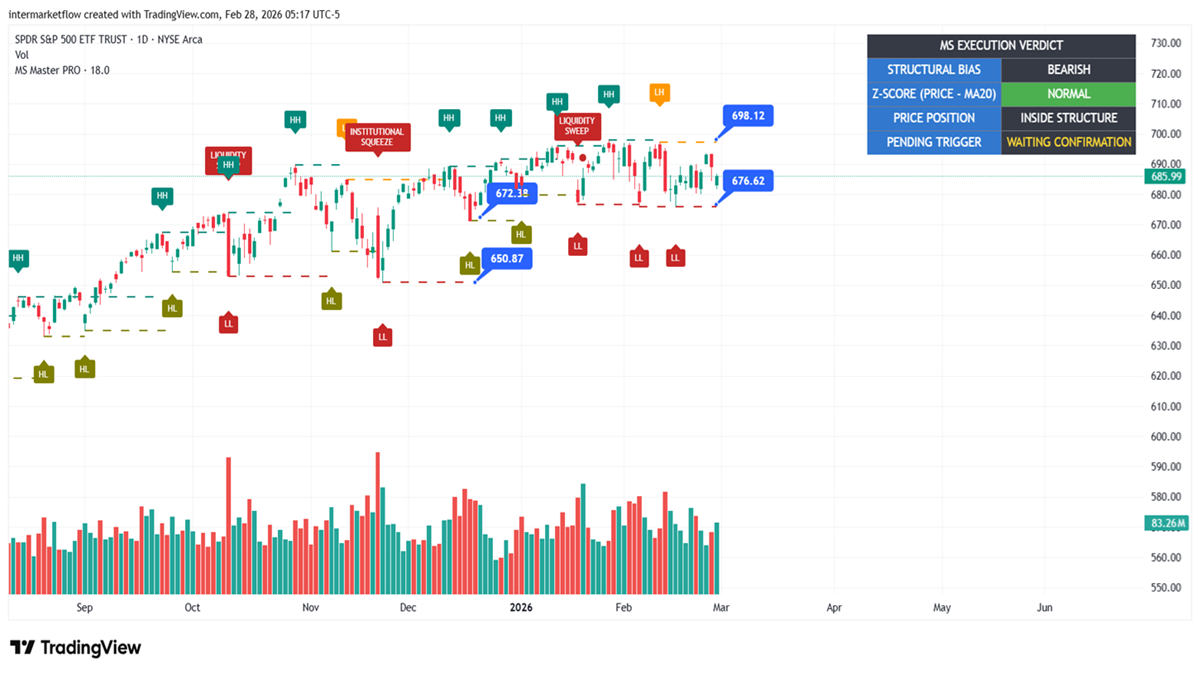
Blue prices mark inflection points. What must be clear is that one of them will begin to generate a cascade. This market is sustained by air.
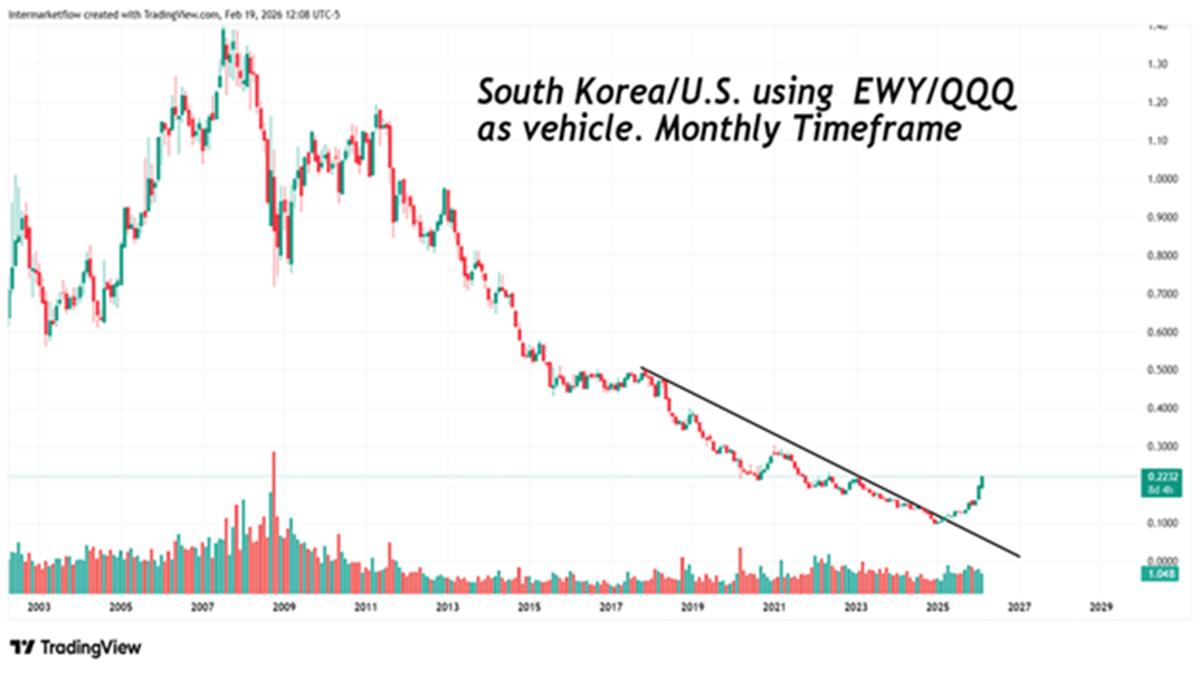
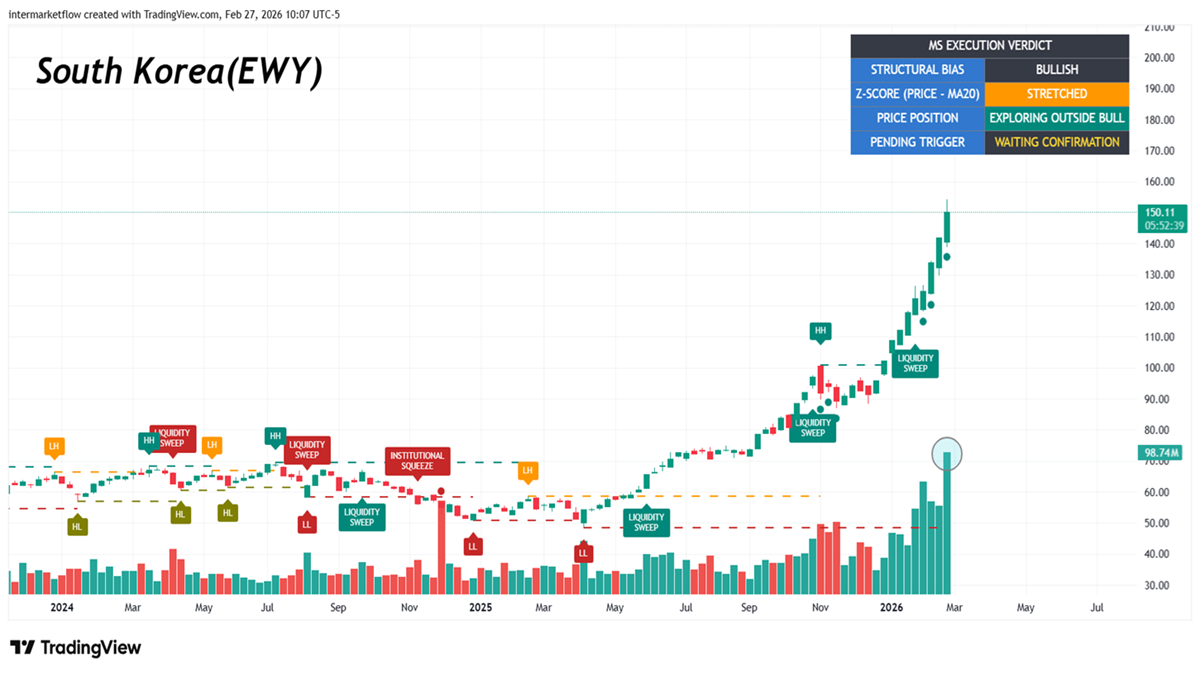
South Korea
Leads sustained activity (off the chart in Z-score metrics) for at least three months. This is a deliberate, structural allocation aligned with the semiconductor cycle, operating under a different monetary regime.
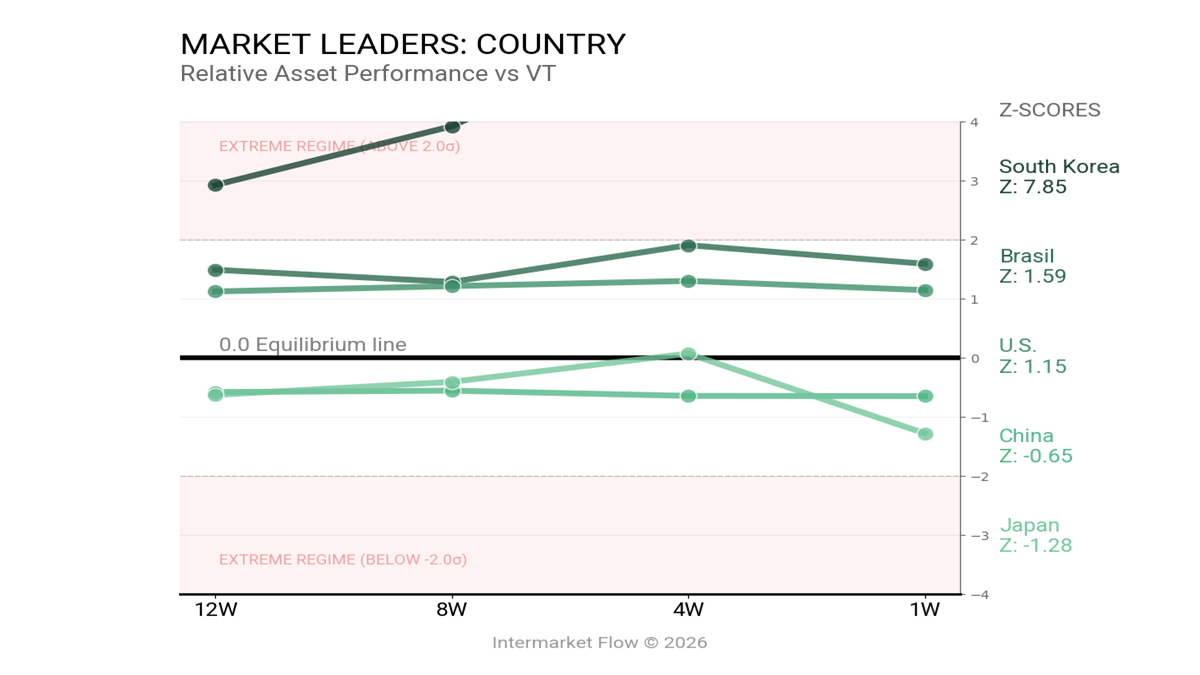
This is a trade outside the US, in a different currency regime, and structurally aligned with semiconductors.
Relative to QQQ
Currency
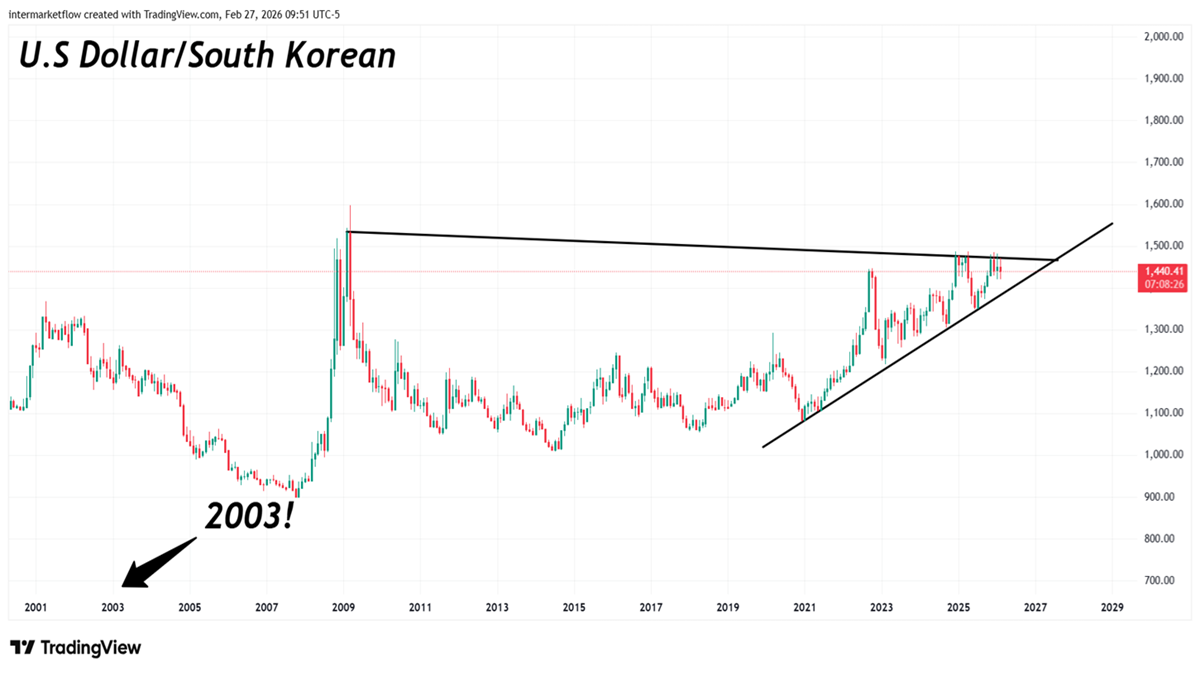
Undervalued in QQQ terms, with the Won at its lowest level versus the U.S. dollar since at least 2003, and with a trend confirmed by volume. That is the context.
Brazil
In a similar phase, although with less magnitude.
This trade seeks exposure to commodities and a potential weakening of the Dollar — an appreciation of the Real. In fact, both can unfold simultaneously.
Central bank spot rate for real denominated deposits (Selic Rate) is 15%
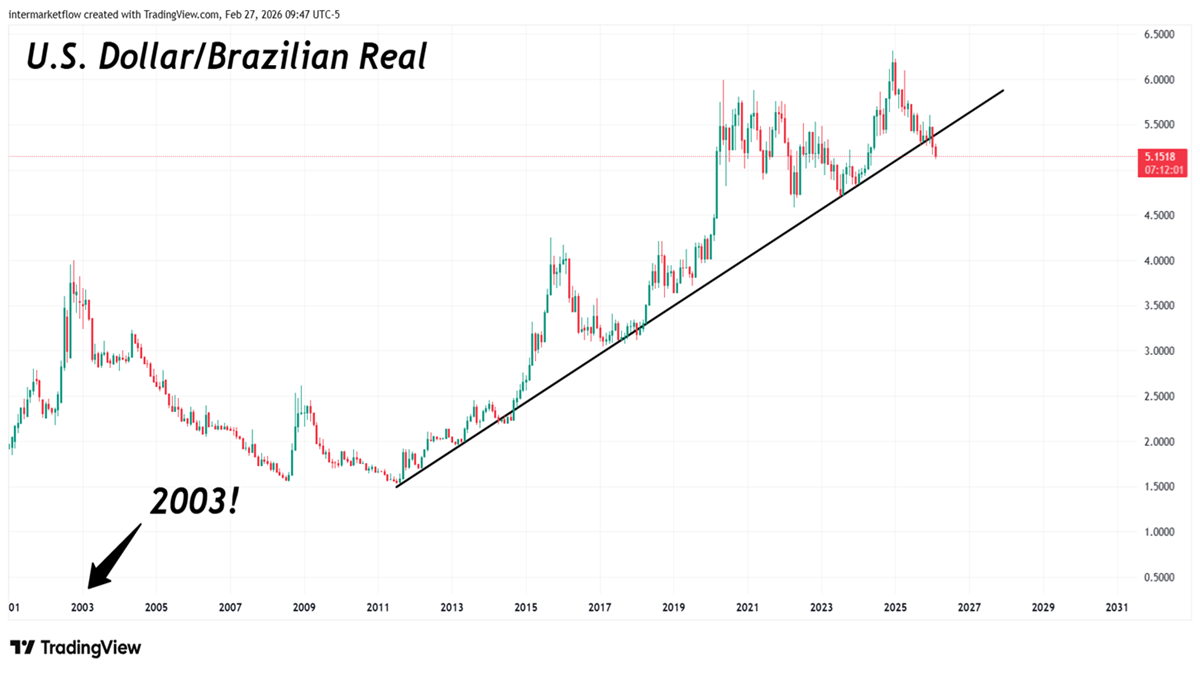
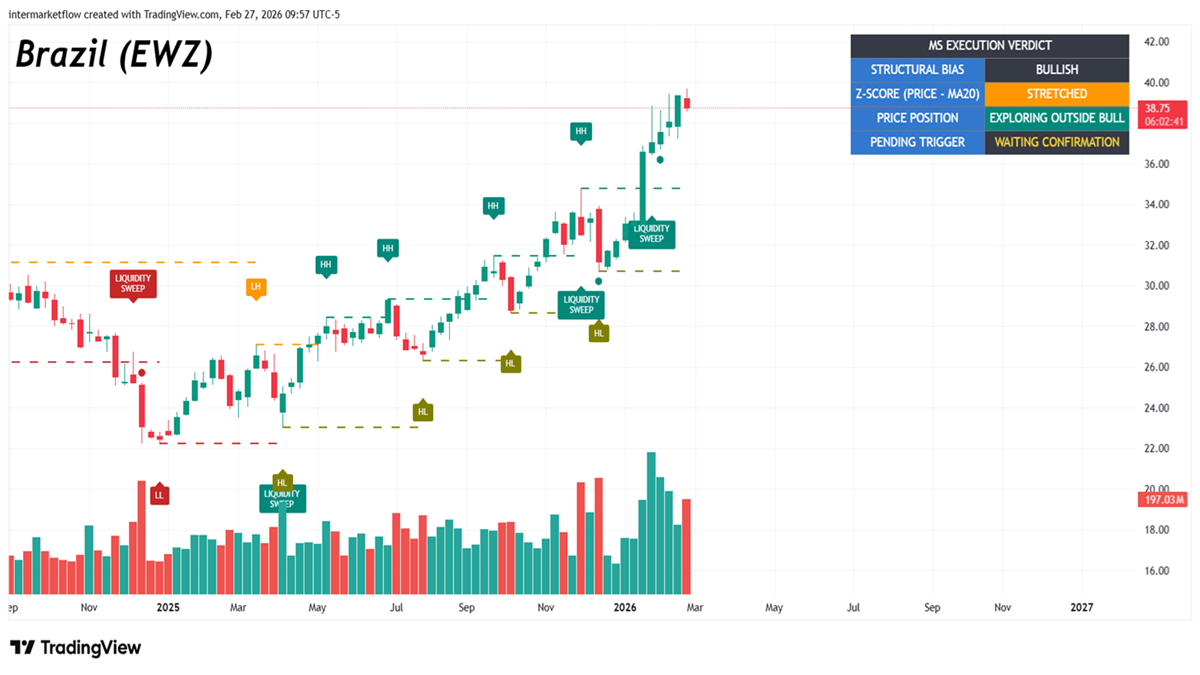
A similar ecosystem to Korea’s, but driven by entirely different fundamentals.
Korea and Brazil may appear to be similar trades. They are not. Each one embeds a fundamentally different market hypothesis. We will discuss a trade about this in the mid week report.
Conclusions
- Zero Beta exposure
- Short Exposure to High Beta Companies/Risk Takers
- Rising weakness within the Financials sector, with potential for a full credit crisis contagion scenario.
- Diversify Dollar exposure
- Duration is an increasing attraction especially outside U.S dollar denominated debt.
Identifying the risks:
1. The liquidity injection carried out by the Fed — without question, the primary risk.
2. The correlation between Emerging Markets and a potential correction in the U.S. Historically, scenarios like this trigger a flight to quality, typically expressed through Dollar strength. In this sense, South Korea and Brazil have different profiles and correlations.
Trade Box on this ones, vehicles, technicals Validation/Invalidation Levels and most important, which risk they hedge.
Mid-Week Report.
Martin
If you believe this is an error, please contact the administrator.