
Negative real rates at the front end are a mechanical mandate for capital migration, forcing a violent repricing across all assets. We isolate this flow below, mapping exactly where liquidity is accumulating and where it is being destroyed—from 12-week structural regimes to 1-week tactical triggers
Bonds
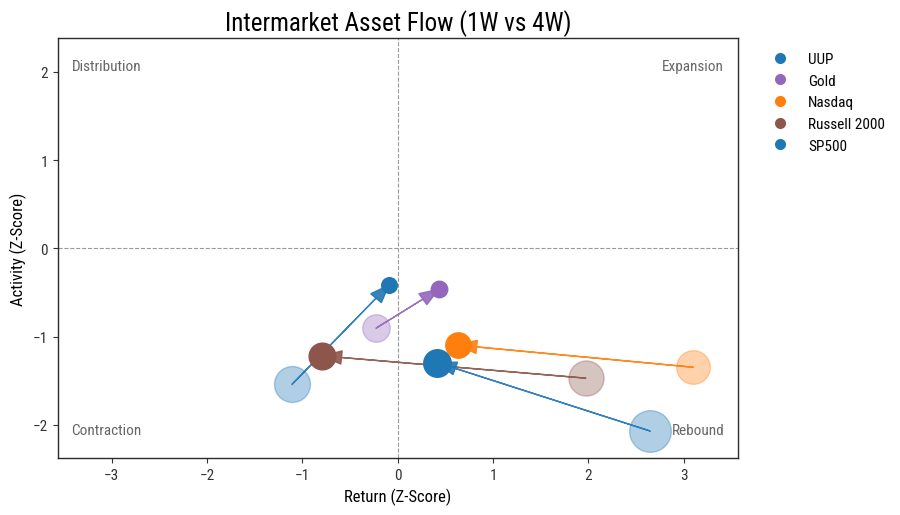
Equities
Commodities
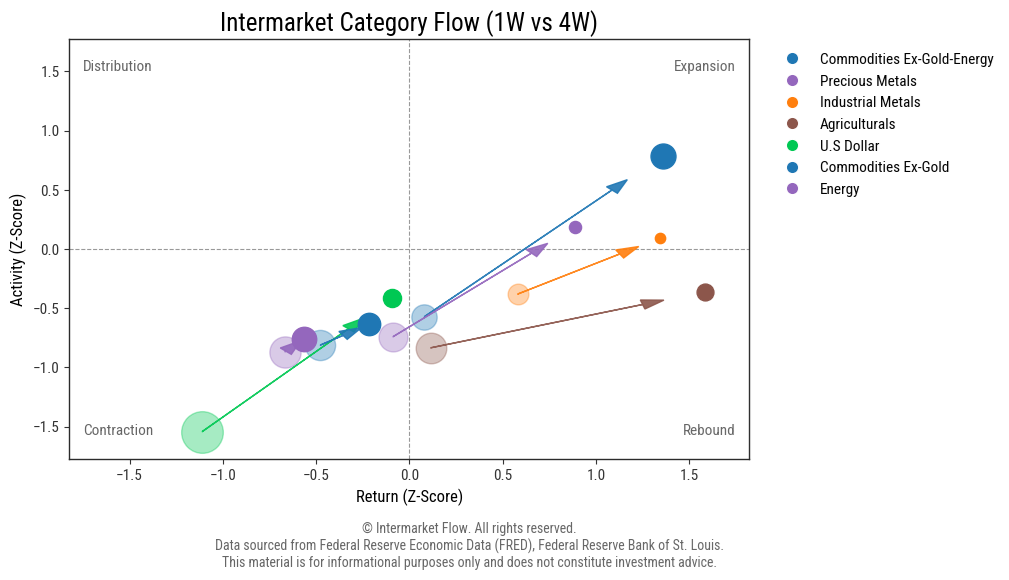
Intermarket causality—the mechanical loop between inflation, rates, and global assets—is currently signaling with rare transparency. The system is no longer whispering its intentions; it is shouting its next move.
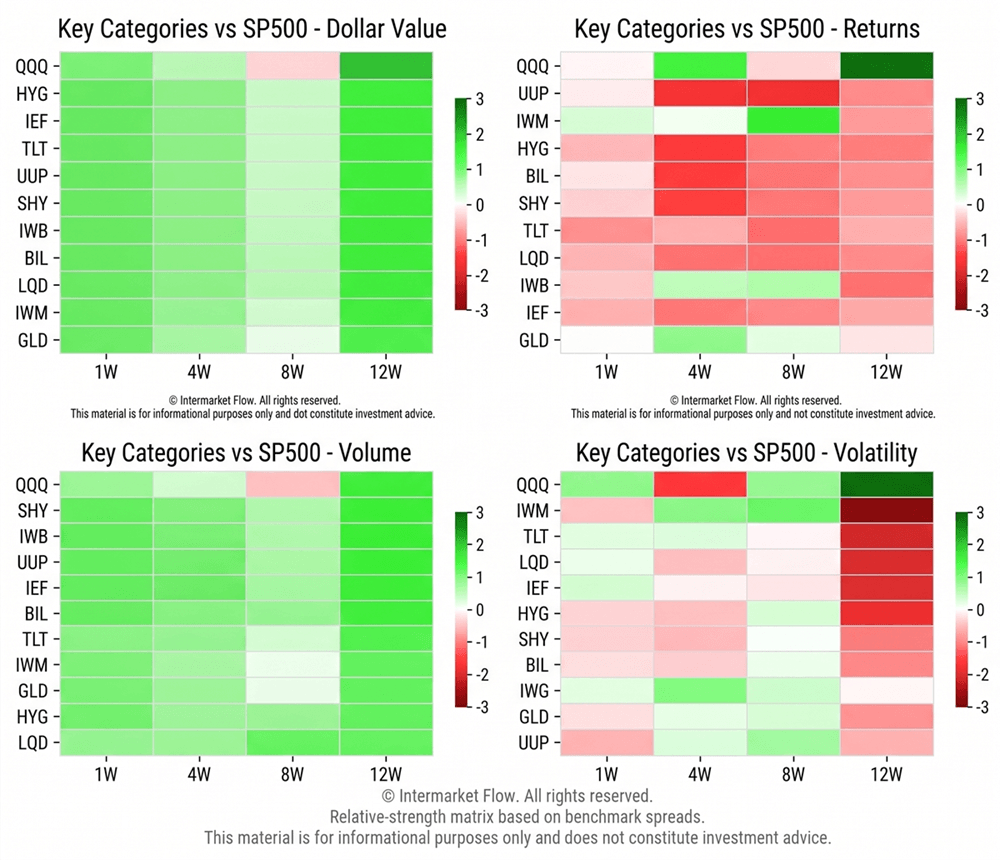
Dollar Value, Returns, Volume, and Volatility of the major asset categories relative to the S&P 500
Key Takeaways
- QQQ Momentum Climax: The Nasdaq 100 has hit a volatility ceiling. With 12-week returns at maximum saturation and 1-week momentum flatlining, the trend is no longer just mature—it is exhausted.
- IWM Institutional Desertion: Small Caps have entered a “zombie” state. The collapse in relative volatility (dark red) confirms that capital has abandoned the sector, preferring total inaction over risk exposure.
- Active Distribution Regime: We are witnessing a textbook distribution phase. Massive 12-week volume is failing to generate price displacement.
- Systemic Rejection of Fixed Income: Bonds have failed as a functional hedge. Persistent negative returns across all windows (4W to 12W) prove the market is actively avoiding duration; current rates simply cannot compensate for the underlying credit risk.
- Gold’s Functional Alpha: GLD is the only asset defying systemic gravity. By maintaining consistent returns and stable volatility, it stands as the sole recipient of defensive flows, successfully decoupling from the collapse in fixed income.
The Yield Anchor: 2Y Correlation Matrix
The U.S. 2-Year Yield is the system’s absolute valuation anchor. As previously established, equities have lost all independent valuation authority; they are now a hostage derivative of the front-end rate cycle. This mechanical tie is the single most important factor for capital survival in the current regime.
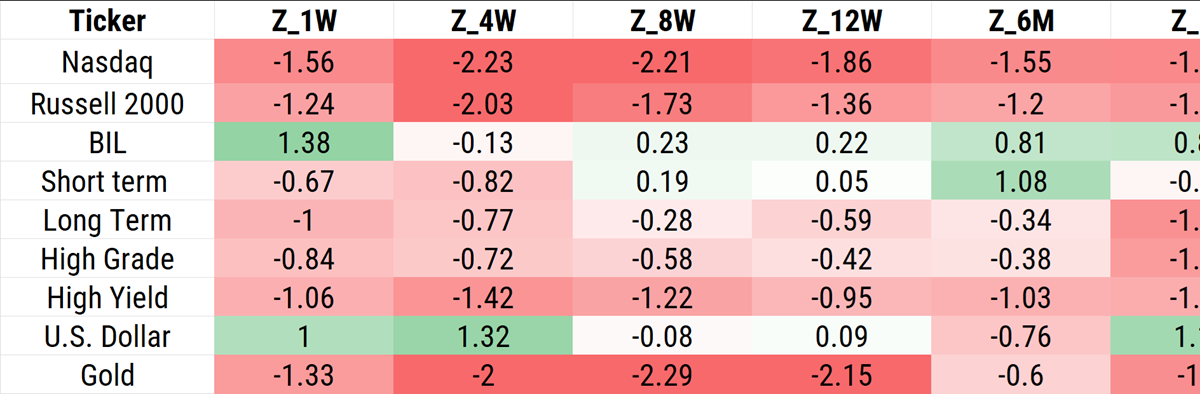
- Equity Repression (Nasdaq & Russell 2000): Both indices exhibit the most aggressive negative correlations in the matrix, peaking at -2.23 and -2.03. This confirms that growth and small caps are no longer trading on micro-fundamentals—they are strictly a proxy for liquidity conditions.
- Subsurface Credit Stress: High Yield credit maintains a deeply negative correlation with the front end (-1.42 at 4W). It is behaving purely as a liquidity-sensitive asset, signaling that significant credit stress is being suppressed just beneath the surface of current price action.
- The Dollar Engine: The U.S. Dollar remains one of the few assets with a strong positive correlation to the 2Y yield (1.32 at 4W). Higher short-term rates act as a structural floor, reinforcing dollar dominance across tactical windows.
- Gold’s Critical Divergence: Despite an extreme negative correlation to rates (-2.15 at 12W), gold is successfully accumulating capital. This is the most significant anomaly in the system: real-world demand is now powerful enough to override the mechanical pressure of the “rate vacuum”.
The Bottom Line: Negative real rates have inverted gold’s historical weakness. In an environment where the rest of the financial system is being hollowed out by inflation and cost of capital, gold is the only vehicle generating consistent relative returns.
Framework 1: Portfolio Management – The Gold Mandate
In a regime of negative real rates, the traditional opportunity cost of holding gold has been completely inverted. Gold is no longer a “non-yielding” liability; it is a mechanical necessity for capital preservation.
- While inflation hollows out the rest of the system, gold has become the primary vehicle for preserving purchasing power against a decaying currency.
- Capital is not “naturally” moving; it is being forced to rotate toward gold as it stands as the sole recipient of defensive flows.
- Despite its extreme statistical sensitivity to the U.S. 2-year yield, gold’s ability to sustain relative returns proves its role as the system’s ultimate diversifier.
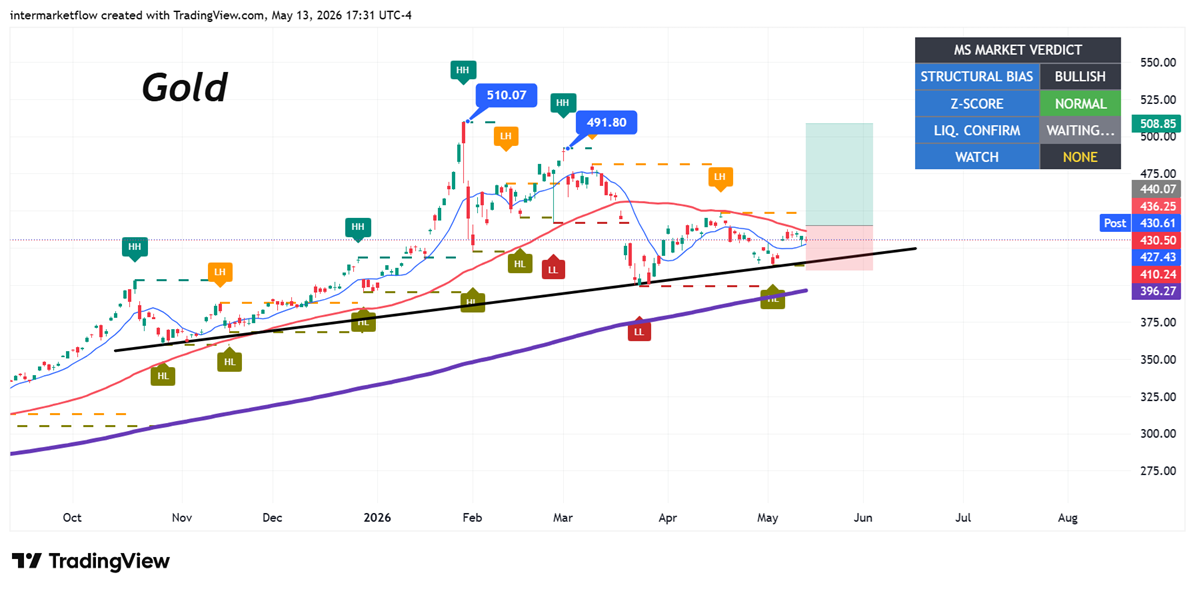
Entry point: confirmation of a Higher Low.
440 on a daily close.
Stop: Close below the prior low, plus additional margin for potential stop hunting.
Targets:
- Target 1: 491
- Target 2: 510
Trade stop: 410.
From a portfolio management perspective, this represents an attractive entry zone.
Macro perspective
Negative real rates directly pressure sectors that depend on short-term financing to generate sales. As the real value of loan books deteriorates, lenders are forced to raise rates, suppressing demand and weakening sales volumes. The focus on the front end of the curve is critical, because that is precisely where real rates have turned negative — at least for now.
Different business models across sectors are exposed to short-term real rates in very different ways. For some, the exposure emerges through inventory, working capital requirements, or the direct sensitivity of sales to financing conditions.
Some examples currently under review.
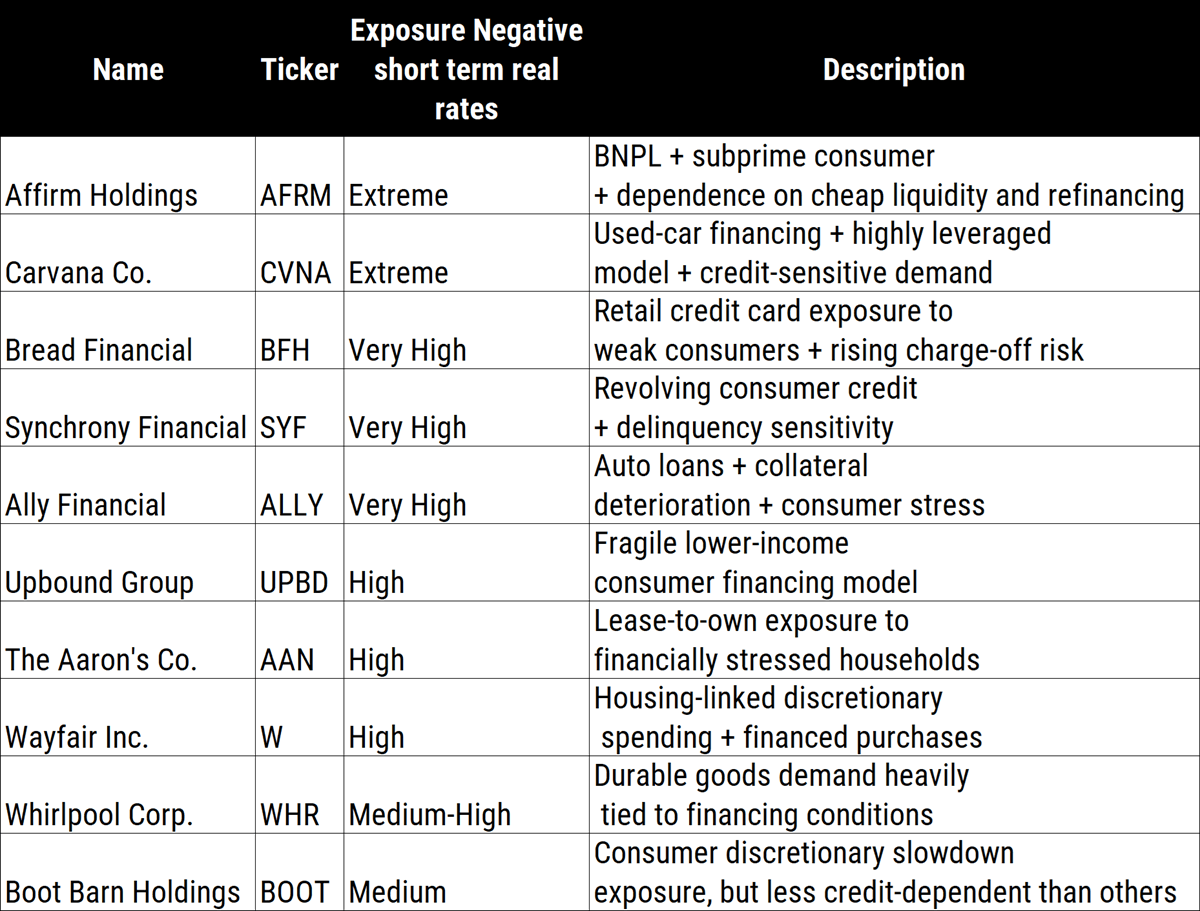
The macro filter is currently isolating the weakest technical structures for immediate liquidation. In a regime of negative real rates, these structures are the first to fracture. We have identified a high-conviction vehicle that perfectly encapsulates this systemic decay.
The Vehicle: Up Bound Group (UPBD)
UPBD serves as the mechanical epicenter of our macro hypothesis, sitting at the junction of deteriorating credit and extreme rate sensitivity.
- Ground Zero Exposure: Targeted at the most rate-sensitive segment of the consumer economy.
- Financing Fragility: Extreme sensitivity to short-term real rates and tightening liquidity conditions.
- Credit Canary: Direct vulnerability to delinquency spikes and refinancing pressure at the lower-end consumer level.
- Liquidity Trap: Inventory and working capital are fully tethered to the contracting credit cycle.
- Leading Indicator: A pure proxy for the developing credit crisis currently moving beneath the surface.”
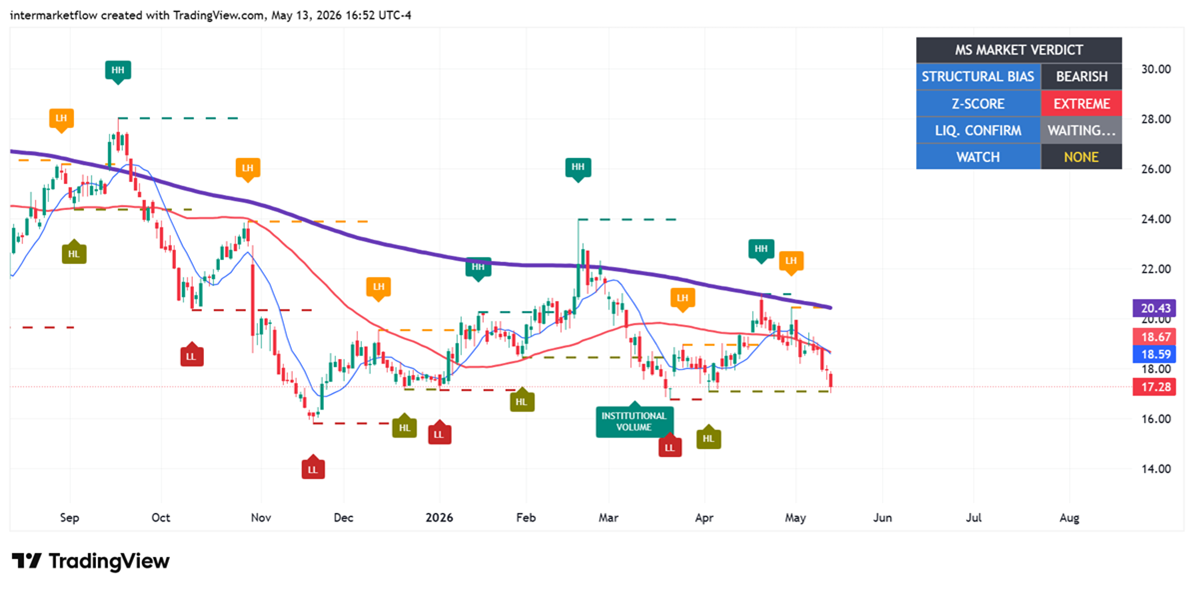
The move is extremely extended on the daily timeframe. Ideally, we want to operate either a minimum ~50% Fibonacci retracement or a breakout, should our conditional trigger chart activate beforehand.
Trigger and Key chart
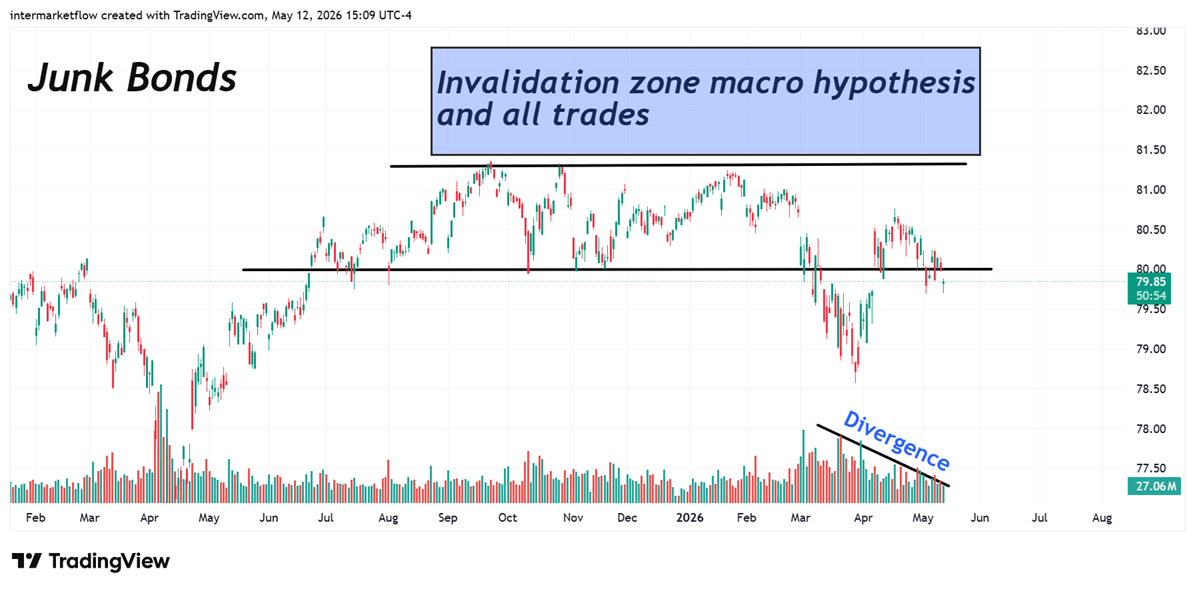
The window for speculation is closed; the mandate for execution is now.
Intermarket Flow
P.S. For a deeper understanding of gold’s underlying drivers, we strongly suggest reading the work of our colleague Chris Rutherglen from Gold Investor Research (giresearch@substack.com).
A well-argued framework built from four different angles, connecting rates, economic conditions, monetary base expansion, inflation expectations, and detailed historical analysis.
If you believe this is an error, please contact the administrator.